Mushrooms in your lawn: what they mean and what to do
Mushrooms popping up overnight after a rainy stretch look alarming, but here is the reassuring truth up front: they are not a disease and they are not hurting your grass. A lawn mushroom is simply the fruit of a fungus that lives in the soil breaking down buried organic matter — old roots, a long-gone stump, scraps of construction lumber, or thick thatch. Extension specialists across the country treat them as a sign of biologically active, healthy soil, not a problem to panic over. The one thing that genuinely matters is keeping them away from small mouths, which we will get to.
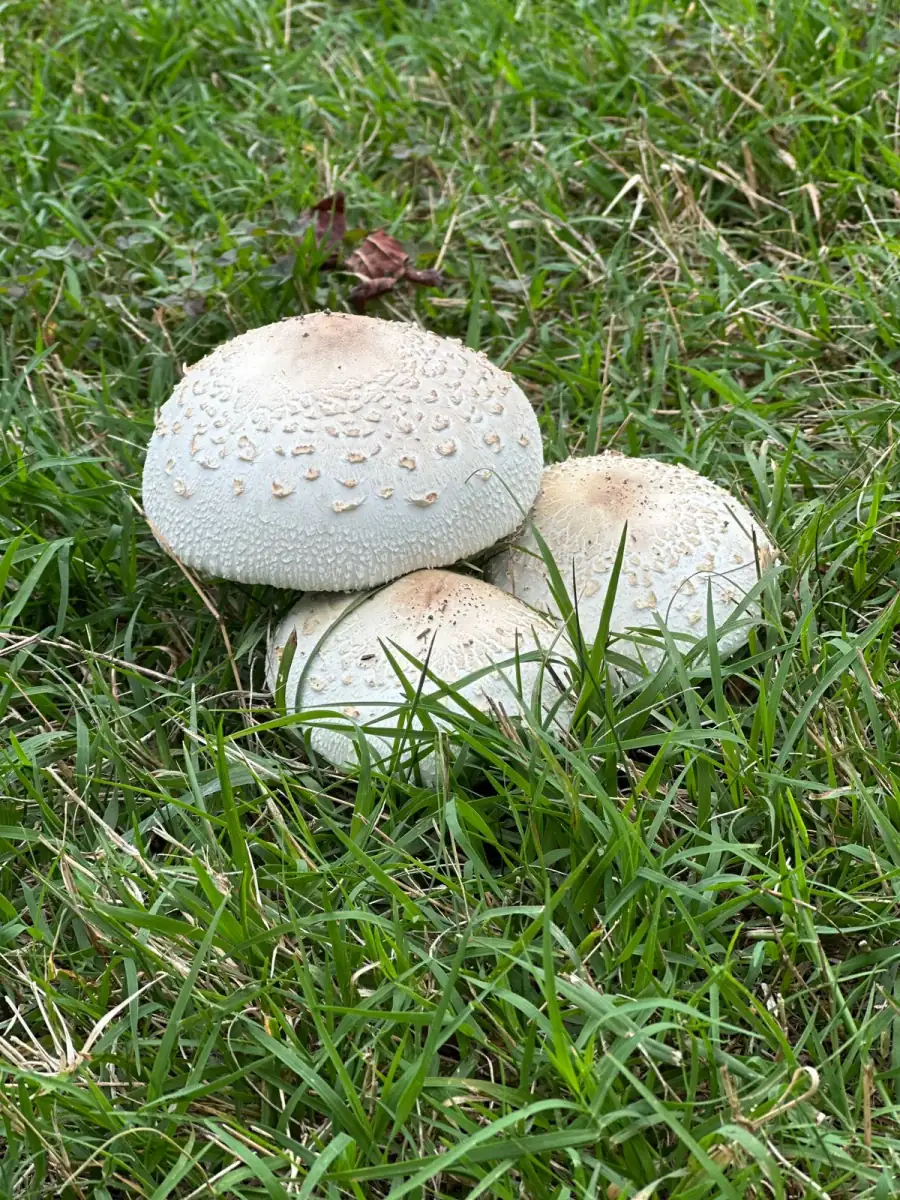
What a lawn mushroom actually is
The mushroom you see is only the tip of a much larger organism. Below ground, the fungus lives as a permanent web of microscopic threads called mycelium, spreading through the soil and feeding on decaying organic matter. When conditions are right, that hidden network pushes up mushrooms — its temporary reproductive structures — to release spores. Then they collapse and disappear within days.
That distinction explains almost everything people find confusing about lawn mushrooms:
- The mycelium is permanent; the mushrooms are temporary. Picking or mowing the mushrooms does nothing to the fungus underground — it will fruit again the next time it is wet. That is not a failure on your part; it is just how fungi work.
- They are decomposers, not parasites. Lawn fungi feed on dead organic matter, not living grass roots. As they break that material down they release nutrients, which is why the grass right around them is sometimes a richer green.
- They signal moisture plus buried food. Where mushrooms cluster, there is usually something decaying below — a buried root, an old stump, or a pocket of heavy thatch — and enough moisture to keep the fungus active.
Why they appear when they do
Fungi survive in the soil for years and fruit only when the weather cooperates. The trigger is almost always prolonged moisture and humidity: a few days of rain, a humid warm spell, heavy irrigation, or the cool damp mornings of fall. That is why mushrooms seem to erupt overnight and then vanish just as fast once the soil surface dries out.
| Trigger | What is going on |
|---|---|
| Days of rain or humidity | Surface soil stays wet long enough for the fungus to fruit. The most common cause of a sudden flush. |
| Fall flushes | Cool nights, dew, and shorter days keep the ground damp — peak mushroom season in most regions. |
| Summer after storms | Warmth plus a big rain event can produce a fast, short-lived flush that dries up within a week. |
| Buried wood or old roots | A removed tree, an old stump, or construction lumber left in the fill gives the fungus years of food. Mushrooms often trace the buried source. |
| Heavy thatch or overwatering | Both hold moisture at the surface and give decomposer fungi more to feed on. |
None of these mean your grass is sick. If you also have discolored patches you are not sure about, the fungus-versus-drought question is a separate one — see the brown patch differential.
The one thing that actually matters: toxicity
Lawn mushrooms do not threaten your grass. They can, however, threaten a curious toddler or a dog that eats things it shouldn't. This is the real reason to act, and it deserves to be taken seriously.
Never eat a wild lawn mushroom, and never assume one is safe. Extension mycologists are blunt about this: there is no simple home test — no color rule, no smell test, no "peel the cap" trick — that reliably distinguishes a toxic mushroom from an edible one. Several dangerous species closely mimic harmless ones, and identification requires expertise most homeowners do not have. Common genera that show up on lawns include Agaricus, Marasmius oreades (the fairy-ring mushroom), Panaeolus, inky caps (Coprinus and relatives), and puffballs — but naming a genus is not permission to eat it, and this guide gives no edibility guidance whatsoever.
If a child or pet may have eaten one
Act immediately — do not wait for symptoms. Save a sample of the mushroom (whole, in a paper bag) so it can be identified. In the US, call Poison Control at 1-800-222-1222 for a person, or your veterinarian or the ASPCA Animal Poison Control Center for a pet. Where children or dogs play, the safest habit is to pick and bin mushrooms as soon as you see them.
Fairy rings: mushrooms in a circle
Sometimes mushrooms — or a band of unusually green or dead grass — appear in a ring or arc rather than scattered. That is a fairy ring: a single fungus growing outward from a central food source, fruiting along its expanding edge. Extension literature describes three types:
| Type | What you see | Why |
|---|---|---|
| Green ring | A ring of lush, dark-green, fast-growing grass | The fungus decomposes organic matter and releases nitrogen, fertilizing the grass over it. Cosmetic only. |
| Dead ring | A ring of dead or brown, thinned grass | The problem type. The fungus makes the soil water-repellent (hydrophobic), so water runs off instead of soaking in and the grass dries out. |
| Mushroom ring | A ring of mushrooms only, no color change | Fruiting bodies appear during wet spells, especially in fall. Harmless to the turf. |
Only the dead-grass type needs real management, and the fix targets that hydrophobic soil, not the fungus itself: core-aerate the ring, apply a soil wetting agent, and water deeply over several weeks to force moisture back into the repellent zone. Matching the surrounding lawn's color with nitrogen fertilizer can hide a green ring. Per extension guidance, fungicides are largely ineffective on home-lawn fairy rings and are not worth the cost or risk. A dead ring can also look like ordinary disease at a glance — the brown-patch look-alikes guide covers how to tell them apart.
Mushrooms, disease, or something else?
Rings and spots can look alike until you know the tells. Photograph the lawn and Lawn Care AI's Lawn Doctor identifies what you are looking at from the picture and gives you the exact next step — so you are not treating a harmless mushroom flush like a disease.
What actually reduces mushrooms
You cannot easily kill the fungus in the soil, but you can make your lawn a less inviting place for it to fruit. Everything below works by removing food or removing the moisture the fungus needs:
- Remove the buried food source where practical. If mushrooms trace an old stump or a removed tree, grinding the stump out and clearing rotting roots or leftover lumber takes away the fungus's fuel. Rake up rotting debris, thick clippings, and leaf litter that feed surface fungi.
- Dethatch if thatch is over half an inch. Thatch holds moisture and organic matter right at the surface — ideal for decomposer fungi. Check the depth with a soil plug; if it exceeds about ½ inch, dethatch or core-aerate.
- Improve drainage and aeration. Core aeration relieves compaction and helps the surface dry out between waterings, which discourages fruiting.
- Water deeply and infrequently, in the morning. Frequent shallow watering keeps the surface perpetually damp. Switch to deeper, less frequent watering early in the day so the grass dries by evening — the watering guide has the full routine.
- Open up shade and airflow. Thinning overhanging branches and improving air movement lets damp spots dry faster, making the whole area less mushroom-friendly.
What doesn't work (and what to skip)
- Fungicides: extension programs advise against them for lawn mushrooms and home-lawn fairy rings. They do not reach the mycelium spread through the soil, they require repeated precisely-timed applications, and the mushrooms were never damaging the lawn in the first place.
- Vinegar and salt: popular internet remedies that will scorch and kill your grass long before they meaningfully touch the fungus underground. Not worth the damage.
- Expecting removal to be a cure: kicking, mowing, or picking the mushrooms only removes the visible part — the fungus stays and will fruit again. That said, prompt removal is exactly the right move where children and pets play: it clears the hazard and cuts down spore spread, even though it is cosmetic for the lawn.
The honest bottom line
Mushrooms in a lawn are a cosmetic event, not an emergency. You have two legitimate choices, and both are fine:
- Tolerate them. They vanish on their own once the weather dries, and they are quietly improving your soil while they last. If no children or pets are involved, doing nothing is a perfectly good plan.
- Remove them cosmetically. Pick or mow them off — essential where kids and dogs play — and, over time, address the moisture, thatch, and buried debris that invite them back.
Either way, the message is the same: your lawn is fine. Mushrooms are the visible sign of a soil that is alive and working.
Mushrooms in the lawn FAQ
Are mushrooms in my lawn bad?
No — mushrooms do not harm your grass. They are the fruiting bodies of soil fungi that are busy decomposing buried organic matter like old roots, a former stump, or thick thatch. Extension specialists actually treat them as a sign of biologically active, healthy soil. The only real concern is toxicity: some lawn mushrooms are poisonous if eaten, so remove them where children and pets play.
Why do mushrooms keep growing in my yard?
The fungus lives permanently in the soil as a thread-like network called mycelium, feeding on buried wood and organic debris. It only pushes up mushrooms — its temporary reproductive structures — when conditions are right, typically after prolonged wet, humid weather, heavy watering, or in fall. When the soil dries out the mushrooms vanish, but the mycelium stays underground and fruits again the next wet spell.
Can I eat mushrooms growing in my lawn?
Never eat a wild lawn mushroom unless a qualified mycologist has identified it. There is no simple home test — no color, smell, or peeling rule — that reliably separates toxic from edible species, and several dangerous mushrooms closely resemble harmless ones. If a child or pet may have eaten one, save a sample and call Poison Control (1-800-222-1222 in the US) or your veterinarian immediately.
How do I get rid of mushrooms in my lawn?
You cannot easily kill the underground fungus, but you can reduce mushrooms. Where children or pets play, pick or mow them off promptly — this removes the visible part and cuts spore spread. Longer term, remove the buried food source where practical (grind out old stumps, rake up rotting debris), dethatch if thatch is over half an inch, improve drainage and aeration, water deeply but infrequently in the morning, and open up shade and airflow. Fungicides are not recommended — they do not reach the mycelium.
What is a fairy ring and how do I fix it?
A fairy ring is a circle or arc caused by a soil fungus growing outward from a central food source. Extension literature describes three types: a ring of lush dark-green grass, a ring of dead or brown grass, and a ring of mushrooms only. The dead-grass type is the problem — the fungus makes the soil water-repellent (hydrophobic), so the grass dries out. Manage it by core-aerating the ring, applying a wetting agent, and watering deeply for several weeks to rewet the soil. Fungicides are largely ineffective on home lawns.
Do mushrooms mean my lawn is unhealthy?
Usually the opposite. Mushrooms mean the soil holds organic matter and enough moisture for fungi to decompose it — a productive, biologically active soil. They can, however, flag conditions worth addressing: heavy thatch, poor drainage, chronic overwatering, deep shade, or buried construction debris and old roots. Fix those and mushrooms become far less frequent, but their presence alone is not a sign of disease.
Sources
- UC IPM: Mushrooms and Other Nuisance Fungi in Lawns
- Wisconsin Horticulture Extension: Fairy Rings
- Iowa State University Extension: Fairy Rings
- University of New Hampshire Extension: Why are there so many mushrooms in my yard and garden?
- UC IPM: Fairy Ring — Turfgrass Pest Management Guidelines
- Photo: Rola Al Homsi via Pexels