Is my grass dead or dormant? How to tell — and how to revive it
Your lawn went crispy and brown in the July heat and you're bracing to rip it all out. Before you do: most "dead" summer lawns are only dormant — asleep, not gone. Dormancy is a survival trick grasses evolved to ride out heat, cold, and drought, and a dormant lawn looks identical to a dead one from your window. The difference is settled by three quick tests you can run in five minutes, and they'll save you a needless reseed or point you straight to the real problem.
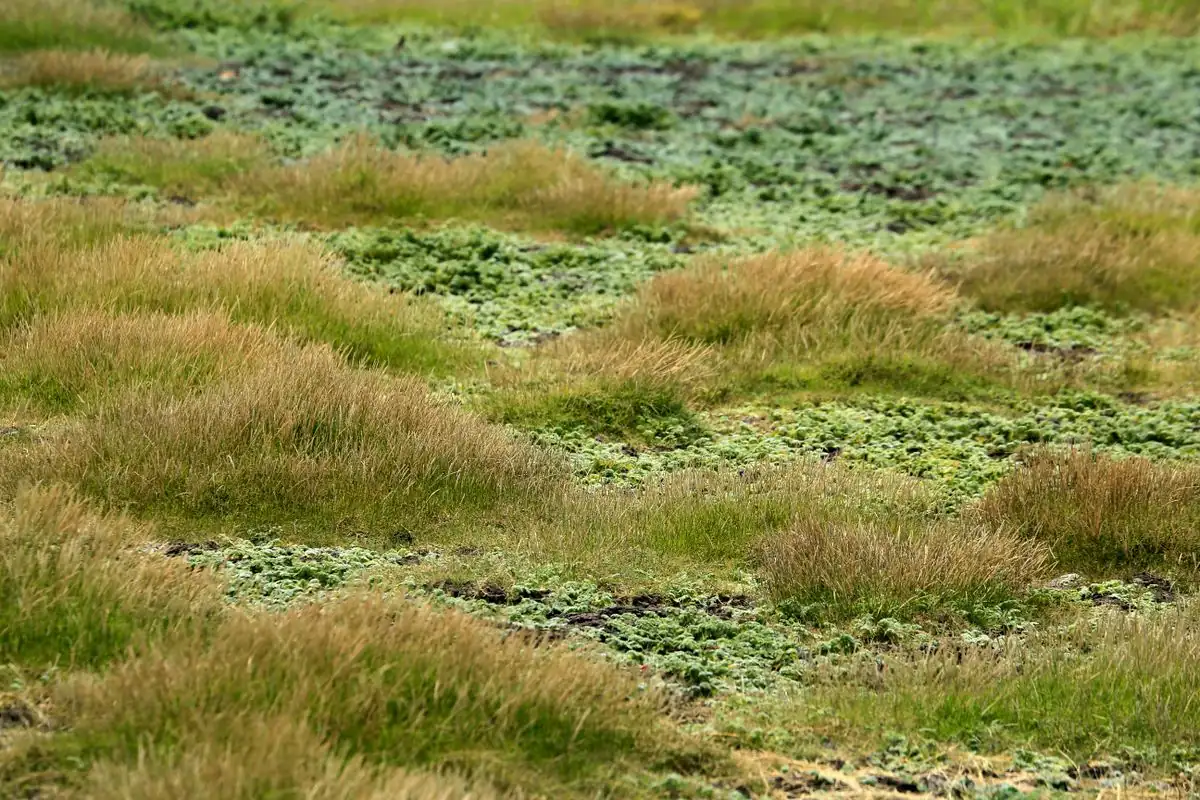
The three tests that settle it
Don't judge by the blades — brown blades tell you nothing on their own. What matters is the crown, the pale nub at the soil line where blades grow up and roots grow down. As long as the crown is alive, the grass can come back. All three tests below are really just ways of reading the crown.
- 1. The tug test. Grab a small handful of brown blades and pull firmly. Dormant grass resists — the crowns are still anchored by living roots. Dead grass pulls free in your hand with little effort, because the roots have let go. Try it in a few spots.
- 2. The crown check. Part the blades with your fingers and look at the base right at the soil surface. A crown that is firm and green or creamy white is alive. A crown that is brown, mushy, or shriveled and dry is dead. This is the single most reliable test.
- 3. The green-up (water) test. Pick a small brown patch and water it well for two to three days. Living, dormant grass will begin to green up within about 7 to 14 days as the crowns wake. If the patch is still brown and lifeless two weeks later, it's dead.
Read the pattern first — it's the fastest clue
Before you touch a blade, look at the shape of the brown. Dormancy is uniform: the whole lawn (or whole sun-baked areas) fades to an even straw color together. Trouble is irregular: sharp circles, streaks, or scattered patches while the rest stays green point to grubs, disease, insects, or spills — not dormancy. If your brown is patchy rather than lawn-wide, start with the brown patch diagnosis or the broader lawn problems guide instead.
Dormant vs. dead: the quick comparison
| Clue | Dormant (alive) | Dead |
|---|---|---|
| Tug resistance | Resists; blades stay anchored | Pulls free easily, no root grip |
| Crown color | Firm, green or white | Brown, mushy, or shriveled |
| Pattern | Uniform browning across the lawn | Irregular circles, streaks, or spots |
| Response to water | Greens up in about 7–14 days | Stays brown; no new growth |
| Timeline | Recovers when heat/cold and drought pass | Won't recover; needs reseeding |
Why lawns go dormant — and for how long
Dormancy is a feature, not a failure. When conditions turn hostile, the grass stops top growth, lets the blades brown off, and concentrates its energy and carbohydrate reserves in the crown and roots to wait out the stress. There are two flavors, depending on your grass:
- Cool-season summer dormancy. Kentucky bluegrass, ryegrass, and fescues green up in spring and fall but can brown out in hot, dry summers. Kentucky bluegrass can survive roughly four to six weeks dormant — often longer — and bounce back when rain and cooler weather return. Tall fescue stays green the longest and may not go fully dormant at all: its roots reach two to three feet down, two to three times deeper than bluegrass's, so it keeps finding water after shallow-rooted grasses have given up.
- Warm-season winter dormancy. Bermuda and zoysia do the opposite — they thrive in summer heat and go dormant in the cold. Once soil temperatures drop below about 55°F in late fall, growth stops and the lawn turns tan-brown for the winter, greening up again in spring as the soil warms. A brown Bermuda lawn in December is completely normal and completely alive.
Knowing which grass you have tells you which brown to expect and when. If you're not sure, identify your grass first — a brown Bermuda lawn in winter and a brown bluegrass lawn in August are both healthy, and both would be a mistake to reseed.
How to keep a dormant lawn alive (without waking it up)
A dormant lawn mostly wants to be left alone, but a long, rainless drought can eventually kill the crowns if the soil goes bone-dry for too long. The goal is to keep the crowns hydrated without forcing the grass back into growth — flip-flopping in and out of dormancy burns through the plant's reserves and does real harm. Extension guidance:
- Water lightly, rarely. Apply about half an inch of water every two to three weeks — roughly one inch per month — during an extended dry spell. That keeps the crowns alive but won't green the lawn up. Then commit: either keep it dormant or water it fully. Don't bounce back and forth.
- Stay off it. Dormant grass can't repair itself, so foot traffic, pets, and mower tires crush crowns that won't grow back until fall. Minimize traffic while it's brown.
- Don't fertilize. Dormant turf can't take up nutrients, and the salts in fertilizer can scorch stressed grass. Wait until it's actively growing again.
- Don't spray herbicides. They're far less effective on drought-stressed weeds and far more likely to injure stressed turf. Postpone weed control until the lawn recovers.
- Raise the mower going into heat. Cut at about 3.5 inches or taller. Longer blades shade the soil, keep it cooler and moister, and support deeper roots — the best insurance against dormancy in the first place. Follow the deep, infrequent watering routine the rest of the season.
Dead, dormant, or something else?
The tug and crown tests are quick — but if the brown is patchy and you're not sure what's causing it, snap a photo and Lawn Care AI's Lawn Doctor identifies the cause and hands you the fix. No guessing whether to water, wait, or reseed.
When brown really does mean dead
If the browning is patchy rather than lawn-wide, dormancy usually isn't the culprit — something killed those spots. Each cause leaves a signature:
| Cause | Pattern clue |
|---|---|
| Grubs | Irregular dead patches that lift like a loose carpet — the roots are chewed off underneath. |
| Chinch bugs | Expanding yellow-then-brown patches in the hottest, sunniest, driest strips (often along pavement). |
| Dog urine | Small round dead spots ringed by a darker green halo, along the dog's routes. See dog urine spots. |
| Fungus | Rings, blotches, or "smoke-colored" tan patches, often after warm humid nights. |
| Scalping | Brown strips exactly where the mower shaved high spots to the soil. |
| Salt / fertilizer burn | Sharp-edged brown streaks or spots where product spilled or overlapped — a driveway edge or a stopped spreader. |
The tell is always the same: a uniform, lawn-wide brown points to dormancy, while sharp, isolated damage points to one of these. When it's the latter, the brown patch guide walks through pinning down which one.
If it's actually dead: reviving the lawn
Here's the honest part: you cannot revive grass that's truly dead. A dead crown doesn't regrow, and no fertilizer, tonic, or watering schedule brings it back. "Reviving dead grass" really means replacing it — rake out the dead material down to bare soil, loosen the surface, spread the right seed, and keep it consistently moist until it establishes. Because the timing, seed choice, and moisture routine make or break the result, we've laid out the whole workflow step by step in the bare patch repair guide — follow that rather than winging it.
But run the three tests before you reach for a rake. Uniform, lawn-wide brown is dormancy far more often than death, and a dormant lawn you tear up would have greened itself back for free. When in doubt, water a patch and give it two weeks — dead grass has nothing to lose, and living grass will tell you it's alive.
Don't panic: the bottom line
A brown lawn in summer is your grass doing exactly what it evolved to do. Dormancy is a survival adaptation, not a diagnosis — the plant is conserving itself, not dying. Read the pattern, run the tug and crown tests, and if you're still unsure, let a watered patch prove it over a week or two. The vast majority of "dead" summer lawns come back on their own with the next good rain.
Dead or dormant FAQ
Is my brown lawn dead or just dormant?
Most likely dormant. A uniformly brown lawn in summer heat or winter cold is almost always dormant, not dead. Tug a handful of blades: dormant grass resists and stays anchored, while dead grass pulls free with no root grip. Then part the blades and check the crown at the soil line — firm and green or white means alive; brown, mushy, or shriveled means dead.
How long can grass stay dormant and still come back?
Cool-season lawns like Kentucky bluegrass can survive four to six weeks of summer dormancy — sometimes longer — and green up once rain and cooler temperatures return. Tall fescue often does not go fully dormant at all because its two-to-three-foot roots reach deeper water. Warm-season grasses like Bermuda and zoysia stay dormant all winter and green up in spring when the soil warms.
Will brown grass turn green again?
If the crowns are alive, yes. Dormancy is a survival adaptation, not damage — the grass parks its energy in the crown and roots and waits. Once temperatures moderate and moisture returns, a dormant lawn typically greens up within one to two weeks. Grass that is genuinely dead will not recover and has to be reseeded.
How do I revive dead grass?
You cannot revive grass that is truly dead — dead crowns do not regrow. If the tug and crown tests confirm dead patches, the fix is to reseed: rake out the dead material down to soil, loosen the surface, spread seed, and keep it moist until it establishes. Uniform browning across the whole lawn is almost always dormancy, so water and wait before you reseed.
Should I water a dormant lawn?
You do not have to, but a little water keeps the crowns alive during a long dry spell. Apply about half an inch every two to three weeks — roughly one inch per month. That is enough to hydrate the crowns without greening the lawn up. Avoid the cycle of watering it green, then letting it go brown again, because breaking dormancy repeatedly drains the plant's food reserves.
Can I fertilize or mow my lawn to bring it back faster?
No — leave a dormant lawn alone. Do not fertilize it (dormant grass cannot take up nutrients and the salts can burn it), do not spray herbicides (they injure stressed turf and barely touch stressed weeds), and keep foot and mower traffic off it to protect the crowns. Going into heat, raise your mowing height to about three and a half inches to shade the soil and encourage deeper roots.
Sources
- Utah State University Extension: Is Your Lawn Dead or Dormant?
- University of Minnesota Extension: Allow Some Browning of Lawns to Conserve Water
- Ohio State University Turfgrass Science: Managing Lawns During a Drought
- South Dakota State University Extension: Dealing with Drought Stressed Lawns
- Iowa State University Extension: Watering Home Lawns