How to get rid of nutsedge — and why it keeps coming back
Nutsedge is the weed that makes people doubt their weed killer. You spray the same product that flattens dandelions and crabgrass, and the glossy yellow-green spikes don't even flinch — because nutsedge isn't a grass or a broadleaf weed, it's a sedge, and almost nothing in the standard lawn aisle is built to kill sedges. Worse, every plant you see is just the visible tip of a network of underground tubers that survive pulling, spraying the wrong product, and winter itself. Here's how to identify it, why it picked your lawn, and the small set of herbicides and habits that actually beat it.
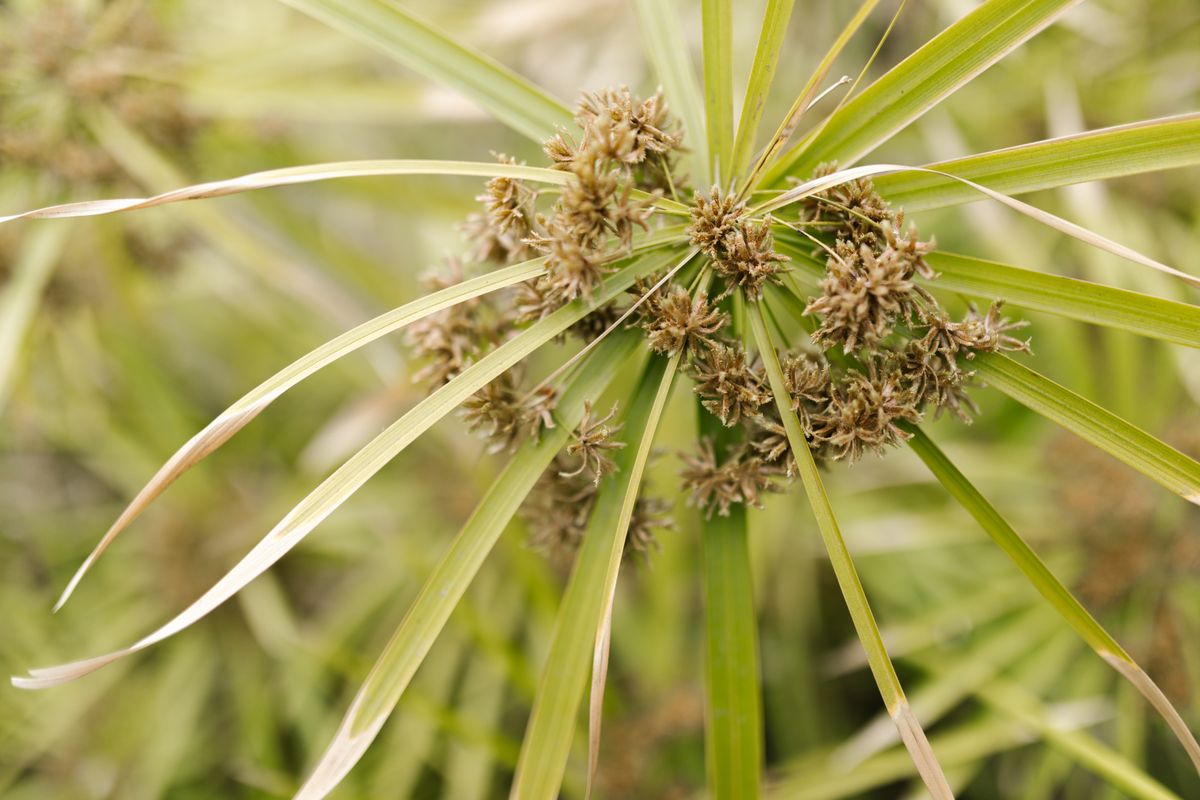
First, confirm it: sedges have edges
Nutsedge (also called nutgrass) gives itself away in three ways:
- The triangular stem. Roll a stem between your thumb and finger. Grass stems are round or flat; a nutsedge stem has three distinct edges — the classic memory hook is "sedges have edges." This one test settles the ID.
- V-shaped, glossy leaves in sets of three. The leaves are stiff, waxy-shiny, creased into a V along the midrib, and emerge from the base in groups of three — grasses emerge in sets of two.
- It outgrows everything. In summer heat, nutsedge grows two to three times faster than your turf. If lighter, yellow-green spikes are sticking up above the lawn just days after mowing, that's the signature.
There are two species, and it's worth knowing which you have:
| Yellow nutsedge | Purple nutsedge | |
|---|---|---|
| Leaf | Yellow-green, tapers to a long, needle-sharp tip | Darker green, blunter tip |
| Tubers | Single tuber at the end of each rhizome | Tubers strung in chains along the rhizome |
| Seed head | Yellowish-brown spikelets | Reddish-purple spikelets |
| Where | Nearly the entire US | Mostly the South and warm-desert regions |
If you're not sure, photograph it with the app's AI weed scan — one photo tells you whether you're looking at a sedge (special chemistry required) or an ordinary grassy weed, before you spend money on the wrong bottle.
Nutsedge vs. crabgrass vs. quackgrass
These three get confused constantly, and each one needs a completely different weapon:
| Weed | Stem | Look & habit | Growth speed | What kills it |
|---|---|---|---|---|
| Nutsedge | Triangular — "sedges have edges" | Glossy yellow-green, upright, leaves in 3s | 2–3× faster than turf; towers days after mowing | Sedge herbicides only: halosulfuron, sulfentrazone |
| Crabgrass | Round, flattened; sprawls | Light green, star-shaped sprawl from one crown | Fast in summer but stays low and wide | Spring pre-emergent; quinclorac on seedlings — see the crabgrass guide |
| Quackgrass | Round; blade bases clasp the stem with little "ears" | Blue-green, coarse, spreads by white rhizomes | Fast in cool spring weather | No selective option in lawns — careful spot treatment |
Why your lawn invited it
Nutsedge is a moisture indicator. It thrives in chronically wet, poorly drained soil — soggy low spots, the strip a sprinkler head overshoots, compacted areas where rain sits — and once established it will even tolerate dry spells better than your turf. That means part of the cure isn't a herbicide at all:
- Audit your watering. Daily shallow sprinkling keeps the surface permanently damp — exactly what nutsedge wants. Switch to deep, infrequent watering per the lawn watering guide.
- Fix the drainage. Level low pockets that pond after rain, aerate compacted zones, and redirect downspouts. A patch of nutsedge is often a map of your drainage problems.
- Check where it came from. New infestations very often arrive in trucked-in topsoil, fill dirt, or nursery pots carrying tubers. Inspect bulk soil before it's spread — one contaminated load can seed a lawn-wide problem.
Why hand-pulling usually fails
Pull a mature nutsedge plant and you'll feel a small victory — and change almost nothing. The plant grows from underground tubers ("nutlets") attached by wiry rhizomes. Pulling snaps the stem off at or near the soil line, the tubers stay put, and within days a new shoot appears — often more than one. The arithmetic is brutal: a single plant can produce hundreds of tubers in one season, most sitting in the top 6 inches of soil but on rhizomes reaching a foot deep. Digging them out for real means excavating 8–10 inches of soil, repeatedly, as survivors resprout.
There is one window where physical removal genuinely works: young plants with fewer than 5–6 leaves haven't formed new tubers yet. If you catch the first few invaders at that stage — and keep pulling every 2–3 weeks all summer, forcing the parent tuber to burn its reserves on replacement shoots — you can exhaust a small, new infestation without chemicals. A tuber spends the majority of its stored energy on its first resprout, so persistence is the whole trick.
The 5–6 leaf rule decides everything
Before the 5–6 leaf stage, energy flows up from the tuber to the shoot — pulling hurts it, and systemic herbicides ride down and kill the tuber. After that stage, the flow reverses and the plant becomes a tuber factory: harder to kill, and every week it stands it banks more nutlets for the next three years. Whatever method you choose, early summer beats late summer by a mile.
The herbicides that actually work on nutsedge
This is where most people lose a season: ordinary broadleaf weed killers (2,4-D three-way mixes) and crabgrass products do not control sedges. Neither do spring pre-emergents. You need one of a short list of actives, sold in small quantities precisely because they're specialists:
- Halosulfuron (SedgeHammer, Hi-Yield Nutsedge Control, and others) — the workhorse. Selective and safe on most cool- and warm-season turf, it moves through the plant into the rhizomes and tubers. Two non-negotiables from the label: add a nonionic surfactant (about 2 teaspoons per gallon of spray) or it beads off the waxy leaves, and plan a repeat application in 6–10 weeks. It is slow — expect two to four weeks before the plants visibly yellow. That's normal; don't respray early.
- Sulfentrazone (the sedge active in several Ortho and Bonide nutsedge killers, and pro product Dismiss) — the fast option. Visible burn-down within days, satisfying on established patches, though tubers may still push regrowth that needs a follow-up.
- Imazaquin (Image Kills Nutgrass) — southern lawns only. Labeled for warm-season turf like bermuda, zoysia, centipede, and St. Augustine; it will damage cool-season grasses.
- Mesotrione (Tenacity) — a niche pick that suppresses yellow nutsedge and is safe around new grass seed, useful if you're treating and overseeding in the same window.
Timing: spray young plants in late spring or early summer, before tubers mature in mid-summer. Treating a lush August stand still helps the eyesore, but by then each plant has already banked its tubers — you're fighting next year's war late. Don't mow for 2–3 days before and after spraying so there's leaf area to absorb the product, and always match the label to your grass type.
Not sure if that weed is a sedge?
Scan any weed with Lawn Care AI's AI weed scan — one photo identifies the species, tells you whether it spreads by seed or underground tubers, and gives you a treatment plan matched to your lawn and local weather.
Cultural control: make the lawn inhospitable
Herbicide knocks nutsedge down; habitat change keeps it down. Nutsedge is a poor competitor in a dense, shaded canopy — it needs light and moisture at the soil surface.
- Mow high. A tall canopy — see the mowing guide for heights by species — shades the soil and starves emerging sedge shoots of the light they need. Scalped lawns grow the worst infestations.
- Grow density. Feed on schedule (when to fertilize), overseed thin areas in fall, and let turf claim the ground before sedge shoots do.
- Dry out the surface. Deep, infrequent watering plus fixed drainage removes the standing invitation.
- Never rototill an infested area. Tilling chops rhizomes and drags tubers to every corner of the bed — it's the fastest way to turn one patch into a whole-lawn problem. Kill it in place first.
- Screen incoming soil. Inspect topsoil, fill, and plant-pot root balls for the small round nutlets before they enter the property.
Realistic expectations: this is a multi-season war
Set the right goal. Tubers in your soil today can stay dormant and viable for up to about three years, and each can resprout more than once — so no single spray, however well-timed, ends it. What consistent control actually looks like:
- Season one: treat early (before the 5–6 leaf stage where you can), repeat per label, fix the watering and drainage. Expect a visibly thinner stand, not a clean lawn.
- Season two: fewer, weaker shoots from surviving tubers. Spot-treat as they emerge — every shoot you kill before it banks new tubers shrinks the reserve.
- Season three: stragglers only, if you've been consistent. Most lawns that stay on the plan reach effective eradication in 2–3 seasons; lawns that skip a year restart the clock, because one missed summer refills the tuber bank.
Common nutsedge mistakes
- Spraying a 2,4-D weed-and-feed at it — it's a sedge; the product isn't labeled for it and won't work. Read for halosulfuron or sulfentrazone on the ingredient panel instead.
- Judging halosulfuron after one week. It's systemic and slow by design — the plant stays green for weeks while the active moves into the tubers. Respraying early wastes product.
- Skipping the surfactant. Nutsedge leaves are waxy; without a nonionic surfactant most of the spray rolls off.
- Pulling mature plants and calling it done. The stem snaps, the tubers stay, and regrowth appears within days — often thicker.
- Rototilling the patch. You just planted tubers across the whole area.
- Treating in late summer and expecting miracles. By then the tubers for the next three years are already in the ground. Late treatment is cleanup; early treatment is control.
Nutsedge FAQ
What kills nutsedge but not the grass?
A sedge-specific herbicide. Halosulfuron (SedgeHammer and similar) is safe on most cool- and warm-season lawns — mix it with a nonionic surfactant, expect a slow, weeks-long kill, and plan a repeat application in 6–10 weeks. Sulfentrazone-based products burn nutsedge down faster. Standard 2,4-D weed killers and crabgrass products won't touch it.
Will crabgrass killer or regular weed killer work on nutsedge?
No. Nutsedge is a sedge, not a grass or a broadleaf weed, so 2,4-D broadleaf mixes and crabgrass products (quinclorac, spring pre-emergents) leave it standing. You need an active ingredient labeled for sedges — halosulfuron or sulfentrazone for most lawns, imazaquin on southern warm-season turf only.
Can I just pull nutsedge by hand?
Only while plants are young. Before a plant has 5–6 leaves it hasn't formed new tubers yet, so pulling every 2–3 weeks can wear it out. Once tubers form, pulling just snaps the stem and leaves them behind — actually removing them means digging out 8–10 inches of soil, repeatedly.
Why does nutsedge keep coming back every year?
Because the plant you see is fed by underground tubers (nutlets) that stay viable in the soil for up to about three years, and a single plant can add hundreds more in one summer. Each tuber can resprout several times, so control is a multi-season effort — expect one summer of consistent treatment to thin it and 2–3 seasons to truly clear it.
What is the light green grass that grows faster than my lawn?
Very likely yellow nutsedge. It grows two to three times faster than turf in summer, so glossy yellow-green spikes stick up above the lawn within days of mowing. Roll a stem between your fingers — if it feels triangular instead of round, it's a sedge, not a grass.
What's the difference between yellow and purple nutsedge?
Yellow nutsedge has yellow-green leaves that taper to a long sharp point and grows a single tuber at the end of each rhizome; it occurs across nearly all of the US. Purple nutsedge has darker leaves with a blunter tip, forms its tubers in chains, and is mainly a problem in the South. Both are treated the same way, though purple nutsedge is the tougher of the two.
Sources
- Clemson University HGIC — Nutsedge
- UC Statewide IPM Program — Nutsedge (Pest Notes)
- Penn State Extension — Lawn and Turfgrass Weeds: Yellow Nutsedge
- Purdue Extension — Controlling Yellow Nutsedge in Lawns (TURF-45)
- Michigan State University Extension — Controlling Yellow Nutsedge in Turfgrass
- Photo: RDNE Stock project via Pexels