How to get rid of crabgrass — and keep it from coming back
Crabgrass is the lawn weed everyone eventually meets, and it wins by arithmetic: one plant drops up to 150,000 seeds, those seeds stay viable in soil for years, and they germinate weeks before most people think about their lawn in spring. You will not out-pull that. The strategy that works is two-part: stop this year's seeds from sprouting (timing is everything), and grow a lawn so dense next year's seeds never see the sunlight they need to germinate.
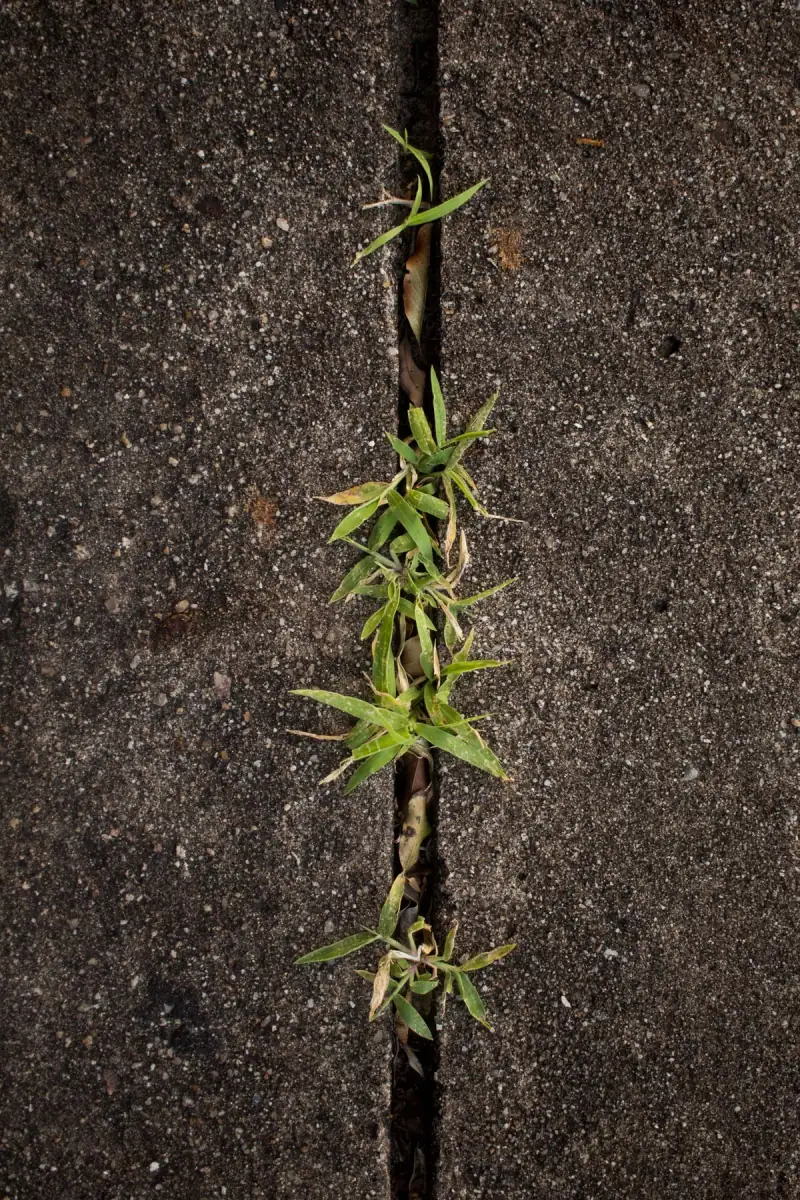
Know your enemy: how crabgrass operates
Crabgrass (Digitaria sanguinalis — large/hairy crabgrass — and its smaller cousin D. ischaemum) is a summer annual. That one fact drives the whole battle plan:
- Spring: seeds germinate when soil at ~5 cm depth holds around 13°C (55°F) for several days — typically weeks before your turf starts growing hard.
- Summer: it grows explosively in heat that stresses cool-season lawns, sprawling flat below mower height and rooting at stem nodes where they touch soil.
- Late summer: it throws up finger-like seed heads and banks tens of thousands of seeds per plant.
- First frost: every plant dies, leaving brown mats and a reloaded seed bank.
So killing a crabgrass plant in August accomplishes almost nothing — the seeds are already in the soil. The war is won in April and September.
First, make sure it's actually crabgrass
Plenty of coarse grasses get blamed for crabgrass's crimes, and the fixes differ completely:
| Grass | Tell it apart by | Right response |
|---|---|---|
| Crabgrass | Light green, wide flat blades, sprawls star-shaped from one crown; finger seed heads | This guide |
| Tall fescue clump | Dark green, coarse, upright bunch; ribbed blades; stays green in winter | Perennial — dig it out; herbicides for crabgrass won't touch it |
| Quackgrass | Blade wraps stem with little "clasping" ears; spreads by white underground rhizomes | Perennial — pulling snaps rhizomes and multiplies it; spot-treat carefully |
| Nimblewill / bentgrass patches | Fine, wiry, mat-forming; browns in winter | Different herbicide chemistry entirely |
| Yellow foxtail | Similar habit but seed head is a fuzzy "bottlebrush" spike, not fingers | Same annual playbook as crabgrass |
If you're not certain, photograph it with the app's Weed ID — it names the species and whether it spreads by seed or rhizome, which decides whether pulling helps or makes it worse.
The crabgrass calendar
| Season | What crabgrass is doing | Your move |
|---|---|---|
| Early–mid spring | Seeds germinate as soil hits ~13°C (55°F) | Apply pre-emergent (forsythia bloom = now) |
| Late spring | Seedlings small, 2–4 leaves, easy to kill | Hand-pull or spot-spray post-emergent |
| Mid–late summer | Mature plants sprawl and set seed | Spot-treat for looks only; don't scalp; plan fall repair |
| Early fall | Plants finishing; turf's best growth window opens | Overseed thin areas — this is the real counterattack |
| First frost | Every plant dies | Rake out mats; note the spots for next spring's pre-emergent |
Stop it before it sprouts: pre-emergent done right
Pre-emergent herbicide (common actives: prodiamine, dithiopyr, pendimethalin) forms a thin chemical barrier in the top layer of soil that stops germinating seedlings from establishing. It's the single most effective chemical move — but only if the timing and the details are right:
- Watch soil temperature, not the calendar. The window is when soil at 5 cm depth holds ~13°C (55°F) for a few consecutive days — anywhere from March to May depending on region and year. Forsythia blooming is the classic folk cue and it's surprisingly reliable.
- Water it in with about 1 cm (½") within a couple of days — rain counts. Unactivated pre-emergent degrades in sunlight and does nothing.
- Don't disturb the barrier: no aerating, dethatching, or heavy raking afterward — you'd tear holes in it. Do those jobs before application or in fall.
- Coverage gaps are crabgrass gaps. The driveway edge and sidewalk strip — the hottest soil on the property — germinate first and get missed most. Overlap your spreader passes there deliberately.
- Split applications win long seasons. Most products protect 8–12 weeks; in climates with long summers, a second, half-rate application ~8 weeks after the first covers late germinators.
- Dithiopyr bonus: unlike the others, it also kills crabgrass that has just sprouted (1–2 leaf stage) — the forgiveness option if you're a couple of weeks late.
Missed the window? Don't waste the application
If crabgrass is already up and past 3–4 leaves, standard pre-emergent is money on the ground. Switch to the post-emergent plan below for this year, and calendar the pre-emergent for next spring — the app's weather-aware schedule flags the soil-temperature window for your exact location so it doesn't slip again.
Already sprouted? Post-emergent options, by stage
- Hand-pulling (seedling to young plant): crabgrass grows from a single crown and pulls cleanly from damp soil — water first or work after rain. Effective and satisfying while plants are few. Fill any gap bigger than your palm with seed; open soil is a crabgrass invitation.
- Selective herbicide (2–4 leaf stage — the sweet spot): quinclorac-based products kill young crabgrass in most cool-season turf without harming it. Add a surfactant if the label calls for one, spray on a calm dry morning, and don't mow for 2 days before and after so there's leaf area to absorb it.
- Mature plants (mid–late summer): honestly assess whether it's worth it. Big sprawling plants shrug off single applications, need two rounds 10–14 days apart, and have usually seeded already. Often the better play: tolerate the eyesore, let frost execute them, and put the budget into fall seed.
- Check your turf type first: quinclorac is safe on most cool-season lawns but damages some warm-season grasses (St. Augustine, centipede) — and fine fescues can be sensitive. The label section "tolerant turf species" is not optional reading.
- Never glyphosate a lawn weed. Non-selective killers take the surrounding turf with it, and the resulting dead circle becomes next year's crabgrass nursery.
Is that weed actually crabgrass?
Scan any weed with Lawn Care AI and get the species, whether it spreads by seed or root, and a treatment plan matched to your lawn — plus pre-emergent timing tuned to your local soil temperatures.
The permanent fix: a lawn crabgrass can't enter
Crabgrass seed germinates only where light and warmth reach bare soil. University turf trials keep finding the same thing: mowing height alone changes crabgrass pressure more than any product. A lawn cut at 9 cm (3.5") can carry a fraction of the crabgrass of the same lawn cut at 5 cm, no chemicals involved — the canopy shades the soil below germination temperature and light levels.
- Mow high, always. 7.5–10 cm (3–4") for cool-season lawns, and never scalp the pavement edges — string-trim them to the same height as the lawn, not down to dirt. The mowing guide has heights by species.
- Water deep, not daily. Shallow daily sprinkles keep the surface warm and moist — a germination chamber for crabgrass — while doing nothing for your turf's roots. Follow the 1-inch weekly rule.
- Feed the turf, not the weed. Crabgrass loves lawns fed heavily in late spring/summer (its growth window) and starved in fall (your turf's). Flip that: see when to fertilize.
- Overseed every fall. Thicken the lawn after crabgrass dies and before spring germination — turf claims the ground first. Repair the summer's casualties with the bare patch method.
- Fix the chronic thin spots. Compacted paths, dry pavement strips, and scalped slopes regrow crabgrass annually no matter what you spray. Aerate, add soil, reroute traffic — remove the habitat.
Common crabgrass mistakes
- Applying pre-emergent by calendar date ("every April 15th") — in a warm spring you're two weeks late; in a cold one you've wasted half the product's lifespan before germination starts.
- Pre-emergent + spring overseeding. The barrier can't tell crabgrass seed from ryegrass seed. Pick one per season, or use mesotrione, the one seeding-safe active.
- Mowing shorter to "cut it out." Crabgrass grows flatter than any mower can cut, and every notch shorter helps it germinate. You're disarming yourself.
- Bagging clippings to remove seed, then leaving the lawn thin. Bagging during seed-head season is sensible, but the seed bank is already massive — density, not sanitation, is what stops it.
- Blaming crabgrass for winter death. It's an annual — it was always going to die in November. Judge your control by how much comes up in spring.
Crabgrass FAQ
When should I apply crabgrass preventer?
When soil at ~5 cm depth holds around 13°C (55°F) for several days — early to mid spring. The forsythia-bloom cue works well. Water it in, and don't disturb the soil afterward.
Should I pull crabgrass by hand?
Yes while young — it grows from one crown and lifts cleanly from damp soil. Mature mid-summer plants have already seeded; pulling then mostly makes holes for more seed.
Does crabgrass die in winter?
Every plant dies at first frost — but each leaves up to 150,000 seeds. Prevention beats killing, every year.
Can I overseed and use preventer at the same time?
Usually no — pre-emergent blocks grass seed too. Overseed in fall, apply preventer the next spring; or use a seeding-safe product (mesotrione) per its label.
What kills crabgrass without killing the lawn?
A selective post-emergent labeled for your turf — quinclorac for most cool-season lawns — applied at the 2–4 leaf stage. Check the tolerant-species list; never use glyphosate on a lawn.
Why does my lawn get crabgrass every year?
Short mowing, scalped edges, thin spots, and daily shallow watering keep re-creating its ideal habitat. Mow high, water deep, overseed each fall — pre-emergent is the backup, not the strategy.